Home About Coffee News Courses Webshop Resources Contact

New project at Finca Tamana in Colombia


21 May, 2012 by Tim Wendelboe

I am writing from my hotel room in Garzon after a long day at Finca Tamana in Pital, Huila, Colombia. I am going to spend a week here to work at the farm.

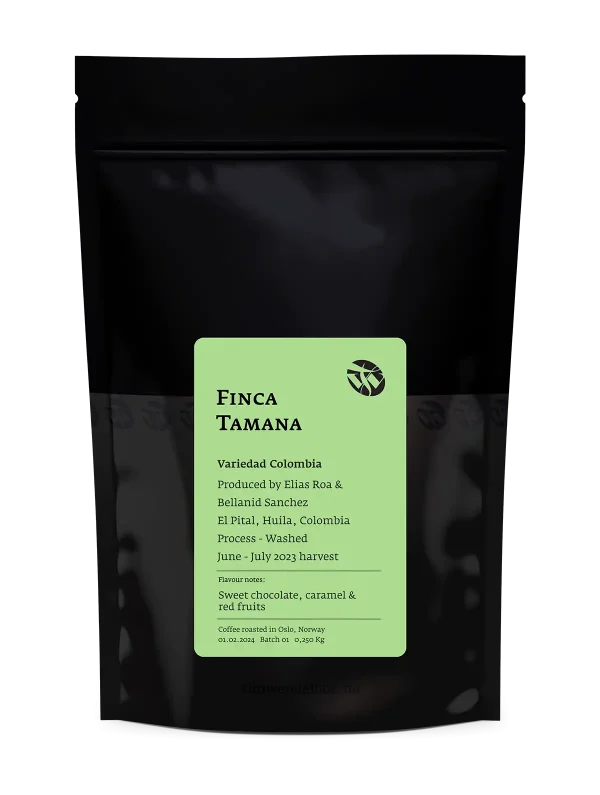
Finca Tamana is a 60 Hectar farm, that my friend Elias Roa retrieved 2 years ago almost by coincidence. It is situated in the mountains near Pital and is the neighboring farm of Finca La Lomita, a farm we bought great coffee from some years ago, before the farmer abandoned the farm and his family in order to pursue his new love. (Sounds like a story written by Gabriel Garcia Marquez.)

I have known Elias for about 5 years after we first met on his farm in Acevedo, Huila on my first trip to Colombia. Although Elias has been growing coffee for many years,  I have never bought any of his coffee due to it’s inconsistent quality. So, when I visited him in Pital in June 2011 and had a tour of his new big farm I got a great idea. I wanted to rent some land on his farm to grow my own coffee. Elias liked the idea and we sat down in November to discuss how we could manage this project. After a long discussion we agreed that I would not rent the land after all, but rather commit to helping Elias improve his farming techniques and the quality of his coffee.  As a payback, Elias will give me priority on his coffees so that I can buy as much as I like of it before it is offered to someone else. I will of course pay a premium for the coffee in order to cover the extra costs of experiments and the new techniques implemented and also to make sure Elias gets a good and secure income. (He is currently only breaking even on his production.)

We decided that we would start working together during the main harvest which normally is in June / July. Therefore I was supposed to come here for 3 weeks in June / July to work at Tamana in order to improve the quality of the coffee and learn Spanish. Everything was going according to plan until Elias called me 3 weeks ago to tell me that the harvest was early this year and I had to come immediately.

As I was already on an around the world trip to Korea, Australia and Guatemala, I managed to change my ticket to go to Colombia too. So, here I am, exhausted after a long day at the farm.

Since it is Sunday today, the workers were not working, so Elias picked me up to go and see the farm and meet the workers in order to plan everything we are going to do this week. I was surprised to see that Elias was already building new drying beds for the coffee as well as making other improvements to the farm that I will write about in a  later post.

New drying tables at Finca Tamana

The most important task for the day was to have a meeting with the pickers and workers at the farm in order to tell them what we had planned. I was a little bit intimidated and nervous to talk to them as I know that they can be very skeptical to change.

To sum up the meeting, here is basically what I told them:   “From today on we will start a new era of Finca Tamana and your lives. We shall only work with high quality and by doing so, be less dependent on the coffee market price and be in control of the quality and income of the farm. That means everyone working at the farm needs to work together and focus on all details every day in order to make the quality better. If one person cuts corners, everyone will  loose. Therefore we have to work as a team towards the same goal. That goal is to produce the best coffee in Huila.

The first thing we will be focusing on is the cherry picking. We will only accept fully ripe cherries to be picked. The green and semi ripe cherries is not to be picked as they need to be left on the trees to ripen. If you pick the green and semi ripe cherries, the quality of the coffee and therefore the value of the coffee will be lower, Elias will loose money, and therefore not be able to pay you better.”

After a 30 minute meeting I was surprised to see that all of the pickers seemed very positive (although they were very shy and hard to read) especially the oldest worker. They agreed to commit to do a better job and were happy to hear that for the extra work they will receive a higher payment (+34%) per 12,5 kg of cherry. Although they need to hand sort cherries after delivery before the coffees are being processed, and the selective picking will be slightly slower, we estimated that in worst case scenario they will have a salary increase of 7-10%.

The rest of the day was spent planning how to process and dry the coffee as well as talking about the importance of accounting and budgeting so that Elias can plan his finance a bit better. We will also be separating all the coffees by variety, lot (full sun and shade grown coffee) and try out some different fermentation and drying techniques.

We start tomorrow at 6am and I will be working until late at night in order to make sure the process runs according to plan. I can’t wait to get started.

To be continued….


Congratulations to Fuglen in Tokyo


14 May, 2012 by Tim Wendelboe

We are very happy to announce that FUGLEN,  one of our best customers and also old colleagues, have opened a second store. This time they have opened in Tokyo, Japan.

Fuglen specializes in Norwegian roasted coffee, Scandinavian vintage design and awesome cocktails.

If you ever go to either Oslo or Tokyo, make sure you pay them a visit.

Fuglen, Tokyo will be selling coffee from Solberg & Hansen, Kaffa, Supreme Roastworks as well as from our roastery. 

For more information go here.

New coffees


8 May, 2012 by Tim Wendelboe

We are now out of Nacimiento, but new samples were approved this week, so we will get more of it this fall.

There are 2 new coffees on the shelf this week. Both from Sitio Canaa in Brazil and both are natural processed. Some of you may remember this coffee from last year. This year we have separated the varieties (Bourbon, Catuai and Sumatra) and we will be releasing all of them one by one.

First out is a  lot of Red Catuai variety that is roasted for espresso. The other lot is from old Sumatra trees and is roasted light for all brewing methods except espresso.

New milk and new opening hours


1 May, 2012 by Tim Wendelboe

Summer is coming up. Therefore we have changed to our summer opening hours.

Monday to Friday: 8.30 – 18.00

Saturday & Sunday: 11.00 – 17.00

Milk for the Mozarella

We have also finally managed to get our hands on organic whole milk from Røros Meieriet.

The milk is a bit less sweet, more creamy and has a much better aftertaste than the old conventional TINE milk. Since the milk is from a very small dairy, the milk will for sure vary more in quality as opposed to milk from TINE who blends good and poor quality together to make a homogenous product. Still, we believe organic milk is better both from a taste perspective as well as from a health perspective.

Since TINE is unwilling to provide us with organic whole milk, we have decided not to buy any milk from them again. We will therefore only be offering whole milk from Røros Meieriet as they only make whole milk and extra light milk. Unfortunately the extra light milk is not suited for coffee drinks as it foams poorly and does not taste according to our standards.

By changing milk we had to adjust the prices slightly as the milk is almost double the price of TINE milk. But we believe it is worth every krone!


Norwegan Barista Championship


30 April, 2012 by Tim Wendelboe

We are very happy to announce that our dear full time barista Ida Kristine Stephansen placed 3rd in this years Norwegian Barista Championships. She also placed 2nd in the Norwegian Cup Tasters Championship. Underneeth is a video of Ida’s final performance as well as a short interview after her performance.

We would also like to congratulate Rasmus Helgebostad for taking 1st place and all the other finalists for a job well done.

And here is a little bonus. The award ceremony:

Nordic Barista Cup 2012


1 April, 2012 by Tim Varney

The line-up for the 2012 Nordic Barista Cup has been announced and our very own Tim Wendelboe will be speaking again this year – he will speak on his experiments to improve green quality at origin. The Nordic Barista Cup is one of the premier coffee events of the year and this year there are some exciting changes to the competition.

He’ll be amongst impressive company – Rene Redzepi from Noma, Oliver Strand from the New York Times & James Hoffmann from Square Mile Roasters – to name just a few.

The full line-up of speakers and their profiles are available on the NBC website : www.nordicbaristacup.com

Easter opening hours


28 March, 2012 by Tim Wendelboe

We will be closed from the 5th to the 9th of April due to Easter holidays.

Our store is open as normal from the 10th of April.

Don’t forget to get some fresh coffee for easter..

Winter in Oslo

Open position at Tim Wendelboe


27 March, 2012 by Tim Wendelboe

We are currently looking for a Barista / Roaster that can work 3-5 shifts per week.

We are looking for a new person that can work shifts in our espresso bar and roastery. Your daily tasks will be working in the bar serving our retail customers & whole sale customers, roasting and packing coffee on our roasting days and last but not least keep our store in perfect condition. You will also be required to work some weekends.

The job is quite physical as you need to be able to handle green coffee bags as well.

You need to be interested in coffee, drink coffee and most of all understand what service is all about.

Experience with coffee related jobs (either as a barista, roaster or similar) is a must. You need to be able to speak either English or Norwegian as communication with our customers is very important to us. Having a drivers license is a plus, but not a must.

If you interested in working with us part time, then please send us an e-mail with an appliccation and a CV.

Developing quality with Jobneel at Naciemiento


14 March, 2012 by Tim Wendelboe

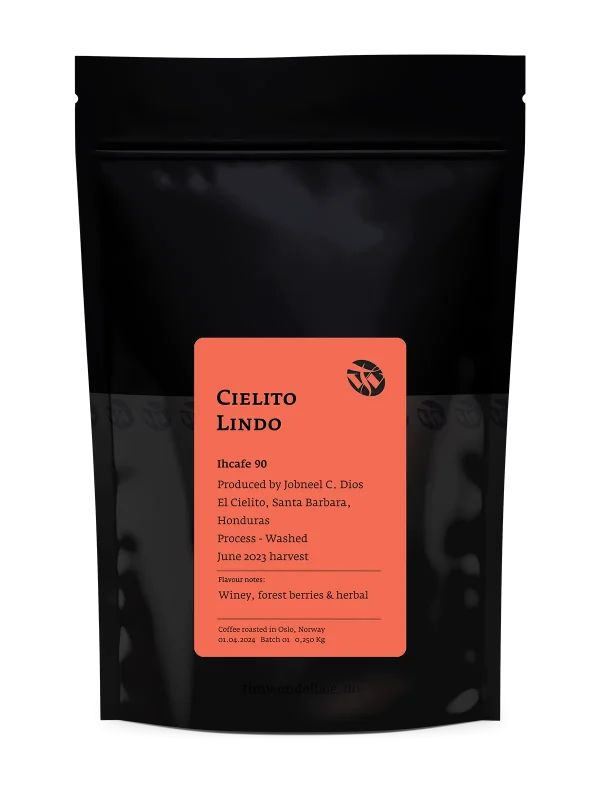
2 weeks ago I visited Jobneel at Nacimiento in Santa Barbara in Honduras. We have been buying coffee from Jobneel and his father Extreberto (Cielito Lindo) for almost 5 years now through the Cup of Excellence and also direct. Although I had a very productive visit to their farms last year, I wanted to try to push Jobneel into doing even better during this visit.

Processing

I was really happy to see that Jobneel was already using the african washing technique that we worked on last year. This certainly removes a lot of the floaters and helps improve the average density and quality of the coffee.  However, I was disappointed to see that his wet mill was a total mess and very dirty. I told him straight away that if he did not clean his mill, most likely we would not buy the coffee as it is very likely to ruin the quality of the coffee. Jobneel started cleaning it straight away and on my recommendation he decided to go to San Pedro Sula the following week in order to buy a pressure washer (I don’t understand why not more farmers use this) to make cleaning the mill easier. We also agreed that it is a good idea to lay tiles in the fermentation tanks as the concrete is hard to keep clean. When I came back to the farm the second day, the mill looked spotless and we were both very happy.

Varieties

Another positive development I saw was that Jobneel was already planting more Pacas on higher altitudes on his farm because of the feedback and the higher price we gave him last year for that particular variety. The Pacas seems to be the best performing variety on his farm when it comes to cup quality as it produces winey and intense fruity coffees. Jobneel asked me if I liked the Catimor he is growing, and to be honest the Cielito Lindo coffee we have loved in the past has been a blend of Catimor and Pacas. Therefore I did not really know what to respond to Jobneel’s question, so we decided to cup the Catimor (Ihcafe 90) to see if I liked it. It turned out to be a very unpleasant experience. It tasted a lot like tobacco and burlap and had a rough mouthfeel and astringent finish. (Like clean Sumatran coffees can taste) Since this has been my experience from a lot of other Catimors I have tasted I decided to advise Jobneel not to plant more. Jobneel however, decided to start to remove his catimors and re plant more Pacas and Bourbon as soon as the new Pacas was performing well.

Cherry selection

The biggest challenge for Jobneel is to get enough pickers to work for him during the harvest as the farm is on the top of the mountain and there are no people living around the farm. At Nacimiento there needs to be picked coffee almost every day as the ripening of the coffee is not uniform because of the unstable climate. This makes it difficult for the pickers to only pick ripe cherries as there is a lot of green unripe and also overripe and cherries, that has broken because of excess rain, on the same tree. I was quite disappointed to see that there was a lot of green coffee in the receiving tank and had to spend about an hour talking with Jobneel how bad this is both for quality and his income. Jobneel constantly answered with how difficult it is to get workers and although he pays them more for only picking ripe cherries, it does not seem to be efficient. I decided to make an example in order to make Jobneel realize the importance of good cherry selection. I took a sample of cherries from the receiving tank and started counting all the unripe, ripe, overripe and broken cherries. The numbers turned out to be:

  • 51% red ripe cherries (Higher Acidity)
  • 17% purple ripe cherries (More sweetness)
  • 29% Green unripe / semi ripe cherries (Astringency and sour acidity and unpleasant nutty flavours)
  •   3% Overripe, dried or broken cherries (Fungus, ferment and unclean flavors)

Jobneel suddenly realize that he was loosing about 20 –  30% of his income just because the unripe cherries will be sold as a commercial coffee where the prices are low. I also told him that if his coffees were not cupping well, we will not be able to buy it as for us the quality is what matters the most. Later that day Jobneel had a strict chat with his workers and they all seemed ashamed that they had been cheating a little bit with the picking.
The following day we decided to take a walk around the farm and to control the pickers to see if they had improved. We took samples from 5 different bags from the pickers and Jobneel started counting the cherries in the samples. We were very happy to see a big improvement, and although it was not perfect it was a good start. The samples contained:
    • 82% ripe cherries (mix of red and slight purple)
    • 18 % semi ripe cherries (red and green)
    • 0% dried and overripe cherries.

I will be working on a solution together with Jobneel in order to make the picking 100% but it will take some time and we are looking at different methods, such as cherry sorting before delivery, utilizing 2 or 3 bags to separate the cherries during picking. Of course this will cost more money, but the results will definitely be worth it.
Jobneel promised me to supervise the pickers every day from now on and I am certain that the coffees we see being picked in March and April will have a lot better quality than the early harvest. (Also because of the slower ripening of the cherries.)

 Next year and beyond

For next year Jobneel will finalize his drying patio and raised beds so he can control his own drying. He will also start implementing the following:

  • Get an agronomist to make a map of the farm, mapping soil quality and variety in order to be able to separate lots and fertilize more correctly.
  • Standardise fermentation and washing techniques.
  • Standardise drying technique on raised beds and patios
  • Hire women to sort out bad parchment during drying
  • Extra sorting of cherries and parchment in march / April
  • Implement logging system and quality control system

I can’t wait to get started, but first I will be enjoying the fresh crop samples from Nacimiento and Cielito Lindo this year. Hopefully they will be available for sale in July.


A day in the life of a coffee farmer


12 March, 2012 by Tim Wendelboe

Here is a rather lengthy post, and I apologize if it gets a bit fragmented.

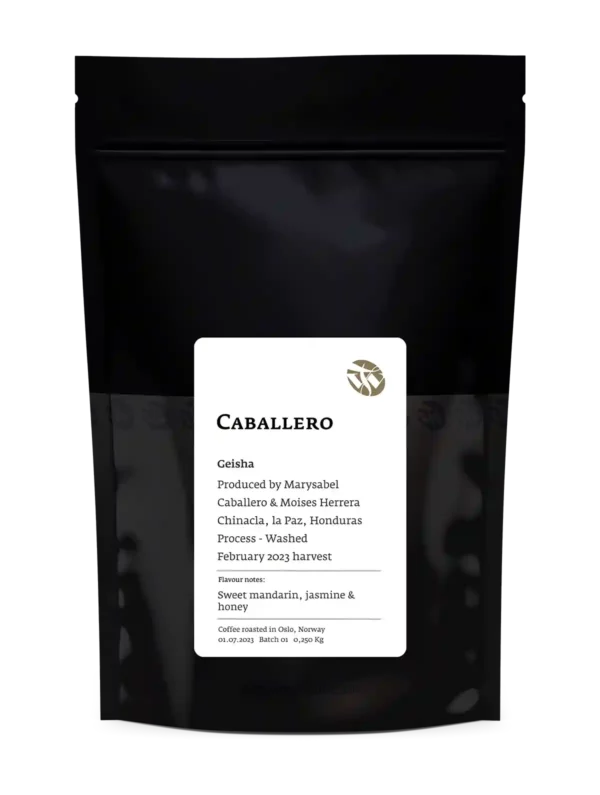
For the past 2 weeks I have been spending quality time with the coffee producers we buy coffee from in Honduras. I spent 2,5 days with Jobneel on his farm Nacimiento in Santa Barbara and have been together with the Caballero family (Moises Herrera , Marysabel and Fabio Caballero) for 5 days.
Normally when I visit farms the schedule is always tight and I have never spent more than one full day with a farmer. Although you learn a lot in 1 day there is a lot of details and situations that never occur in such a short time.

On this trip I have learned a lot more about the everyday life of a farmer. I know that 5 days is not representative of what goes on throughout the year, but still I got the sense of how frustrating the life of a farmer can be.

Weather

It doesn’t come as a surprise that every single coffee farmer on the planet is 100% dependent on the weather. We do see climate changes in all origins we buy from and for most of the times it is very problematic. I have never really thought about how this affect the farmer from a day to day basis, but boy did I get a feeling of it while visiting the Caballero’s farms in Marcala.

It all started with a drying experiment that we had planned to conduct. We were drying freshly washed coffees in 8 different methods where 7 of them are depending on dry and sunny weather. On the Monday where we was supposed to start the experiment, it started pouring down from the skies, and it continued for 2 full days, leaving the Guardiola (mechanical dryer) as the only efficient method for the first 2 days. (Except when the electricity disappeared for 4 hours in the night.) The rain really made me frustrated as I had planned to come and do these experiments for a long time. Fortunately it stopped raining on the third day, so we could proceed with the experiment.

Rain has been a problem in a lot of origins during 2011. Colombia has had non stop rain in some areas for almost 3 years. Kenya had rain during the harvest in December making drying complicated and just a few years ago they experienced a severe draught, making the crop very small.  El Salvador and Guatemala had too much rain causing land slides and a drop in crop yields. In Honduras they had a long cold and moist period in Marcala and the coffee shrubs were attacked by fungus such as leaf rust and “ojo de gallo”. At some of the Caballero’s farms there are so much wind that the coffee trees struggle surviving. They had also experienced extremely cold weather that affects the quality of the beans and also kills a lot of new coffee plants.

There are also a lot of other problems with too much rain that is hard to imagine if you don’t experience it yourself. Pickers refuse to pick coffee on rainy days, although they need the money and the farmer desperately needs to harvest the cherries in order to prevent the cherries from bursting. (During rain, ripe coffee cherries will get filled with too much water  and burst / crack and get fungus attacks resulting in moldy and phenolic flavors.) 

The dirt roads from the farm to the mills transform into what some people call mud baths, making driving coffee around very challenging. The list just goes on and on and it all affects the livelihood of coffee farmers who sometimes are 100% dependent on the coffee crop as it is their only income once a year.

Climate change is not only making it difficult for the farmers, but is changing where and how coffee is grown as the coffee shrub requires many years to adapt to new climates.


Social aspects

I also witnessed a lot of social issues that are very challenging for farmers to handle.

In the rural areas where the coffee farms are located in Honduras there are loads of problems with drinking, stealing, drug trafficking, human trafficking, and security in general. That doesn’t mean it is not safe to live there. You just need to take precautions. In fact one of my very good friends and coffee exporter in Santa Rosa, Mr. Peter Rodriguez was shot in the lung while driving his car on his way home from work. The whole thing was a misunderstanding according tot the shooter, but Peter almost lost his life. Fortunately he is recovering in hospital and we all hope he will be back stronger than ever before.  Of course shooting is not a daily event for farmers, but there are loads of other problems that can occur.

Here are some examples.

Moises and Marysabel in Marcala is not able to keep bee hives in order to promote pollination of coffee trees, as local people living around the farm will just steel them. In El Salvador, the Pacas family could not keep fruit trees in their farms as local people will cut them down or break the coffee trees while trying to harvest the fruit. At Caballero’s farms they do grow fruit for their workers to harvest, but sometimes people cut down the trees just to get their hands on some avocados.

Another problem is that a lot of the local people have cows, but no land to keep them. They therefore break the fence at the coffee farm in order to let the cows grass feed. Of course there is damage done to the coffee trees and for small farmers this is a problem as it ruins part of their livelihood.

Jobneel at Nacimiento has challenges with getting pickers to work for him. Although he pays a better salary for the pickers to only pick red cherries, the pickers prefer to work for less and pick what they want. Fortunately there are some exceptions, but Jobneel is struggling getting enough people to pick coffee as his farm is at the top of the mountain and there are no people who live there.

Other farmers have problems with pickers being a bit too eager to pick. In fact some will trespass into the farms at night and steal coffee straight from the trees. However, stealing coffee from the trees is not the biggest issue I have seen.

Since the coffee prices are quite high and has been for almost 2 years now,coffee has become a target for organized crime. In fact our exporter Servex in Guatemala had several containers of coffee stolen from a warehouse they were renting about 1 or 2 years ago. There were about 50 uniformed and armed people that raided the warehouse at night and came in with several trucks and stole the coffee.  It is not uncommon to hear about coffee being stolen from the road or small warehouses or even the patios at the farms, but normally it is 1 container or less and not high quantity like this. Since this was a big quantity loss,  Servex only got 40% covered by the insurance which is a major economical drawback for any company.


Unfortunately we were also affected by theft this year as a truck with coffee driving our very best lot of coffee was hijacked and disappeared on it’s way to the dry mill. I am absolutely devastated as this coffee was the best I had tasted from this origin, but unfortunately there is not much I can do about it.


There is of course a lot more challenges that a coffee farmer has to live with than I have described in this post. This was just a few things that had occurred while I was traveling for the last 2 weeks and although I still struggle getting a feeling of how frustrating this must be for a farmer, I hope that more people realize that coffee farming is hard work (especially if you are trying to grow the best quality)  and needs to be rewarded with better and consistent prices as coffee is the only income for most coffee farmers.